Hetch Hetchy Valley, As Amazing As Muir Said It Would Be

Hetch Hetchy Valley, As Amazing As Muir Said It Would Be

Have you ever heard about a place and just needed to go experience it for yourself? With the help of my cousin, I crossed one of those places off my list: Hetch Hetchy at Yosemite National Park. Ever since learning about it at college, I’ve wanted to go and experience what it was that made that area such a wonderful place. Let me back up- what is Hetch Hetchy you’re wondering.

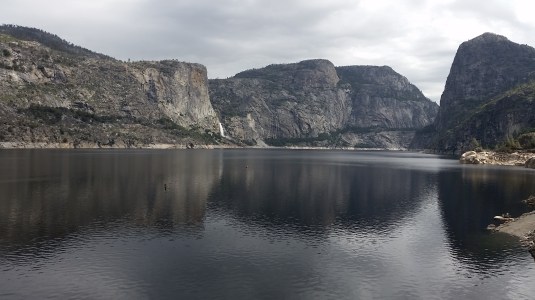
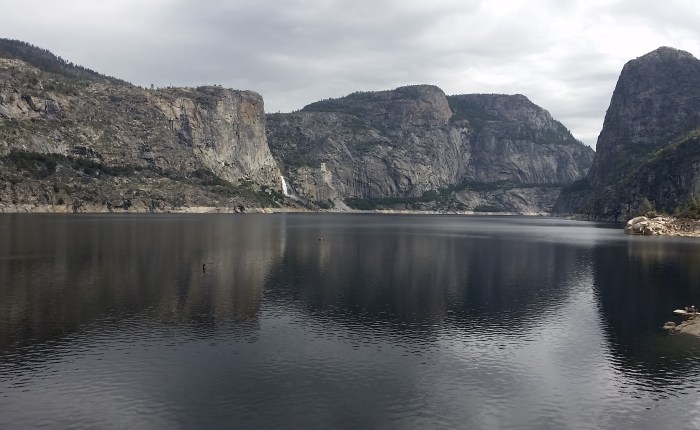
Photo from the Restore Hetch Hetchy Project. Taken 1908 by Isaiah West Tabor.
Standing on the dam at the beginning of the hike. Use Kolana Peak to compare the two photos, 108 years apart.

During the fall of 1871, John Muir visited Hetch Hetchy Valley for the first time. He was a conservationist in every sense of the word, meaning he felt that nature needed to be protected and not saved simply for human benefits later. About 180 miles west of Hetch Hetchy Valley was the growing city of San Francisco. Officials were concerned with the growing city’s need for water and began looking at areas to build a reservoir. The years of 1908 through 1913 saw this great debate about whether or not to build a dam in the valley and use Hetch Hetchy for the reservoir.

Looking at the dam from the Wapama Falls over looking the reservoir.

Muir argued against this construction. He and his supporters appreciated the beauty of Hetch Hetchy and the marvel of true wilderness simply for what it was and not as a human resource. President Wilson saw its value too, but for its benefit to San Francisco and approved the project. Michael O’Shaughnessy, the project director, and his team completed the dam in 1938. Yosemite became a National Park in 1890, thanks to the lobbying by Muir himself. The controversy over the construction of the dam continues to this day since the dam was built on National Park land, protected land- it is the only project that destroyed protected land in the history of the National Parks.

*                  *                  *                   *                    *                   *

Flash-forward a little more than 80 years, I am at the University of Wisconsin-Madison, where Muir spent many years, and I am learning about environmental issues and both sides of this debate. I learned about Muir and Gifford Pinchot, Wilson’s Natural Resource Advisor, and their backgrounds and ideas about Hetch Hetchy. We talked about it at some point in every one of my environmental classes so I became knowledgeable and passionate about how to see both sides of an environmental issue. I got to the point where I wanted to see Hetch Hetchy for myself and see what was so special about Yosemite in every sense.

My cousin and I had the meadow to ourselves the night we camped in Yosemite. We ate our breakfast with Mule Deer who came down to the valley to graze- these were the only large wild animals we came across.

Sight: This trip I have two answers for my favorite site. One was when we were driving to the trailhead and Hetch Hetchy just came into view. I was star struck. I kept sitting up further in my seat to see more of it and when my cousin and I were hiking around it, I kept wanting to stop to keep taking it all in. We hiked 10 miles each day. We ended the first day with a 5-mile hike up the side of a mountain before reaching the meadow where we spent the night. That was my second favorite site: seeing the meadow. My thighs, my butt and back were killing me- I’ve never been so happy to see a meadow or an awkward log to sit on.
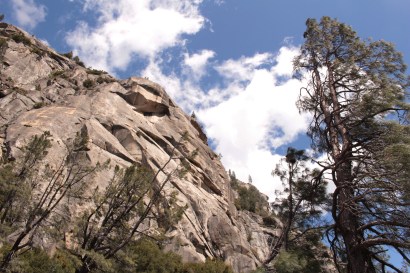


One step in front of the other, dont forget to look up at the trees and smell the fresh air.

Smell: This is an easy one, and I noticed it right away. Fresh pine. As soon as we got onto the trail and away from the parking lot, you could smell how fresh the air was. Even when I was out of breathe from all the switchbacks at the end of the first day, I would breathe in deeply and feel clear and calm. And no it’s nothing like a pine scented candle or having the Christmas tree in your living room for a month, this smell surrounds you and gives you a hug saying, ‘welcome back to nature.’

This slideshow requires JavaScript.

Sound: Throughout Yosemite National Park there are several waterfalls- who knew! During our hike around Hetch Hetchy we passed several smaller falls before coming to Wapama Falls. This gorgeous curtain of water cascades down from the side of a cliff before spraying off several rocks and flowing into the reservoir. You can hear it and feel the spray from it hitting the rocks before seeing it. We ate lunch next to the Falls both days. It was soothing to watch each section of water make its way over the edge of the cliff before rushing down. Water is just so cool 🙂

Taste: If you hike, camp or workout often you know there are certain snacks that just taste better when you’re burning hundreds of calories at a time. For me, it was Teriyaki and Sweet Chipotle Jerky. My cousin hikes and camps often and knew all the good stuff to bring. We paired these jerky flavors with, what seems like a staple camping food for my cousin, hard Parmesan cheese. I hesitate to try this without having hiked 10 miles, but our breaks for jerky and cheese were delicious and appreciated.
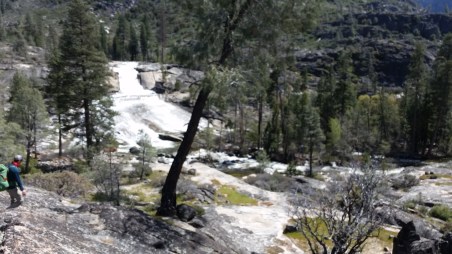
This is where we decided to break from the trail and get down to this river.

Touch: At one point during the first day we diverted from the trail to get to a river to fill our water bottles (do not leave the trails or head into an area you can’t get out of- this PSA brought to you for the National Parks). To get back to where the trail was, we climbed up over these large rocks. Given that my pack was 20 pounds and that I am not used to rock climbing I had trouble getting over the last rock. My cousin came down and took my pack from me so I could just pull my body over the edge of the rock. We weren’t up very high, but I needed to use all my arm strength (not much) to pull myself up and over the rock. I was concerned about my grip and where I would put my leg when I swung it over the rock. I could feel my heart beat pick up and my adrenaline kick in. I was a little scared- what if I fell backward. I looked backward- bad idea. I got the best grip I could on this rock and pulled myself up. My cousin and I both agreed maybe we didn’t do anymore rock climbing.

A little more abstract, but I feel like this trip I really got more in touch with myself. I did things like climbing up those rocks and peeing in the middle of the night in woods where we knew there were mountain lions and bears (oh my) that I have never done before. I put myself out of my comfort zone and I feel much stronger. We’re encouraged to get outside our comfort zone and do things that make us a little uncomfortable and I think that’s why we must continue to do this. It forces us to rely on ourselves exclusively and see what we’re really capable of because if we don’t get in touch with this part of us, we’ll never know.
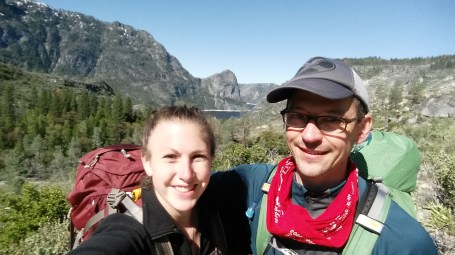
Here's to more family hiking trips!
Here’s to more family hiking trips!

Shout out to my cousin Kevin! I could have never done this without him. I am not a very experienced outdoorslady and I needed his expertise to help make this dream of mine a reality. That being said, if you have a dream or something you want to go do or try- find someone who can help you or find a way to make it happen on your own. These are the experiences that you’ll never forget and the ones that help you reach your full potential.
Today is Earth Day

This post is originally from Earth Day 2014. 

Today is Earth Day! Quick history lesson: Gaylord Nelson created Earth Day in 1970 after a decade of that spurred environmental action. This time in America was just after the rise and fall of the use of DDT and after the publication of Rachel Carson’s book “Silent Spring.” This was the first time that people who weren’t scientists or hippies paying attention to the environment. On April 22, 1970 people celebrated the Earth and their desire for a healthy and strong environment; rallies and demonstrations took place across the country. It wasn’t until 1990 that the holiday became a global event.

Celebrations for Earth Day vary from planting trees to enjoying a walk outside to reading Aldo Leopold’s “Sand County Almanac.” Aldo Leopold was the father behind conservation and is most famous for his “land ethic.” The land ethic is about protecting the health of the land through developing and building relationships between people and nature. The “land ethic” is about the entire community in ecosystems so plants, animals, people, soil, air, water or anything that interacts with each other. There is a mutual respect for everything in that community; this is Leopold’s vision for the “land ethic”.

Pictures from my trip this past weekend to the Aldo Leopold shack. 

The best way to celebrate Earth Day, in my opinion, is to appreciate the environment and nature. Instead of thinking about all the problems and complicated issues I’ve touched on in my other articles, focus on how it smells outside or how it’s finally spring and the buds are coming out. (Unless you live way north in which case I wish a speedy melting of your last snowfall). That for today we celebrate how great of a day it is, celebrating the little things. We could pay more attention to the song of the birds or make a meal from the freshest, most local food we could find. Appreciating the environment.

In Madison, Wisconsin I celebrated Earth Day by first, wearing green- how easy. My student organization, REthink Wisconsin, partnered with our University Bookstore for their “Hug a Tree for Charity” event. For everyone that hugged a tree the bookstore agreed to donate $1 to REthink. We successfully raised $300. I found it funny that people responded “no” to the question “Do you have time to hug a tree?” while looking down at their phones. Maybe just for today people could look up and enjoy nature instead of down at their phones.

Two members of REthink posing with their check from the Bookstore. 

As Nelson once said, “the wealth of the nation is its air, water, soil, forests, minerals, rivers, lakes, oceans, scenic beauty, wildlife habitats and biodiversity… that’s all there is. That’s the whole economy. That’s where all the economic activity and jobs come from. These biological systems are the sustaining wealth of the world.” On Earth Day instead of focusing on the material items you don’t have or what you want, look at the nonmaterial ‘wealth’ that we do have all around us.

I also volunteered at an Earth Day Conference at the Monona Terrace located just off the Capital Square in Madison. The theme of the conference was “Ecology, Economy and Justice in a Rapidly Changing World.” I helped run a breakout session about Phosphorus and what projects were being done around the state to help prevent phosphorus runoff from entering the lakes around Madison. For those that travel to Madison during the summer, especially in the last few years, know that the lakes turn this brown or greenish color depending on the amount of rainfall that brings phosphorus from farmland, residential neighborhoods, cities etc. One of these projects is sponsored by the Clean Lake Alliance. They facilitate relationships between farmers who encourage other farmers to take actions on their properties to help control phosphorus runoff. This type of responsibility is inspiring and applies to many parts of sustainability.

Whether you’re at a conference, in an office all-day or running around doing errands. Take part of today to get outside or do something for nature. Maybe today isn’t the day. Set aside your own Earth Day. Maybe that’s one time or once a month to just appreciate how exciting and fascinating nature can be. We sometimes take these sites, sounds and smells for granted but today, on Earth Day, we take time to take a closer look and realize how special nature is and that it truly does deserve to be respected and protected. Happy Earth Day!

Just yours truly hugging a tree. 


Fenway Park, Paul Revere, Cambridge and Much More – Two Days in Boston

Fenway Park, Paul Revere, Cambridge and Much More – Two Days in Boston

I’ve always enjoyed history, specifically American history. I love documentaries about American wars, the settling of our country and anything that gives a glimpse of how the land was thousands of years ago. Not to mention I have made it a goal while traveling to visit all the iconic spots seen in the movie, National Treasure. So I was very excited to be able to travel to Boston for work along with a day or two of site seeing and catching up with good friends. Here is my sensory tale from my three wonderful days in Boston, MA.

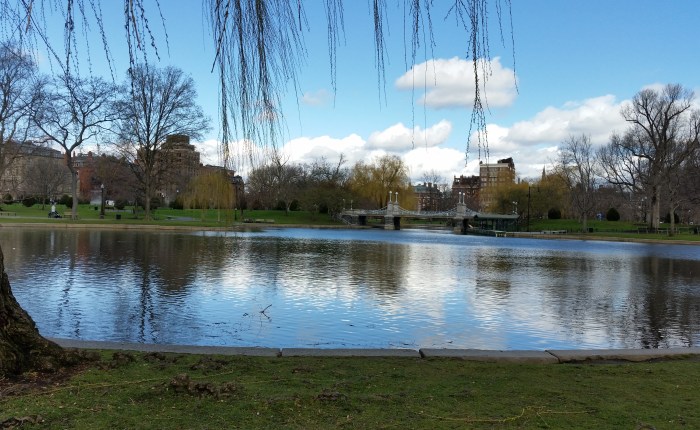
Sight: Let me start out by saying I managed to see a lot while in Boston. I walked to Fenway Park by way of the walkway along the Charles River, the Boston Commons and Public Garden. I learned a lot about Paul Revere by visiting his historic home, walking along the Freedom Trail and across the Longfellow Bridge, eating at Green Dragon Tavern, stopping at the North Church and Paul Revere Mall as well as paying respects at his final resting place in Granary Burying Ground. I spent time enjoying the spring weather in the Boston Commons while admiring the golden dome of the State Building. I also took a cup of tea to the Boston Tea Party Museum and walked through both Harvard and MIT while spending time in Cambridge.

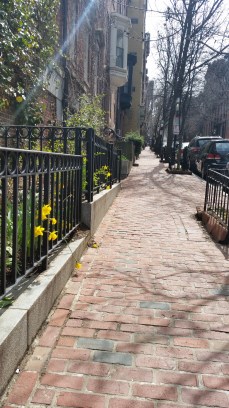
I loved the old feeling I had walking through the streets. The brick roads and sidewalks and the colonial architecture.

So with all that in mind, my favorite site(s) were the streets of Boston themselves. I spent a lot of time walking through the North End and Beacon Hill. You can tell you’re in an old city just by how the roads curve and are so narrow. In the North End the streets are brick and uneven, you feel like Paul Revere or Samuel Adams could turn a corner and start walking towards you. I also noticed, that’s sort of odd to notice, the streetlights. They were black, iron and the lights inside them were dimly lit like candles. Walking around Boston, you can feel the history and it’s an experience I have yet to find anywhere else.

Sound: While waiting to meet my friend in Cambridge- I should mention this is my oldest friend who I had not seen in 8 years, so I was very excited- I was sitting at The Abbey drinking a glass of wine listening to the bar chatter. As each new person came in, the bartender and owners greeted them, mostly by name. It made the whole place feel very welcoming and comfortable as though it was a family reunion instead of busy bar. Even as I was sitting alone, I didn’t feel alone. I was part of the reunion, relaxing and catching up after a long week.

Smell: I’ve always been comforted by smells. That probably sounds weird, but think of your family or significant other; they have a distinct smell that when you hug or embrace, you probably feel calm and safe. So when my long time friend, since we were in 3rd grade, walked into the restaurant, I stood up to give her a huge hug and her perfume was the same as always- Anise Anise. Since we last saw each other every time I smell it I think of her and it makes me smile. She gave me a small bottle to take back home with me :-).

I walked through Harvard and MIT and not to sound like a snob, but I liked MIT's campus much better. The river view is gorgeous and everyone just seemed much more approachable.
I walked through Harvard and MIT after spending time with my friend and not to sound like a snob, but I liked MIT’s campus much better. The river view is gorgeous and everyone just seemed much more approachable.

Taste: I had a lot of delicious food in Boston and Cambridge; I was fortunate to have my friends pick great restaurants and order very well. Thursday night after the work event, I met with a few work friends at a restaurant in China Town, Shojo. It’s a smaller place with an urban but cozy vibe. My friends ordered several dishes like fried rice, a chicken sandwich, short ribs and my favorite taste from the trip: Big Mac Dumplings. Yes, it was all the wonderfully satisfying flavors of America’s favorite sandwich wrapped up and served as a dumpling. There was no bun or cheese, but the meat inside was flavored so well that I ended up eating 2 and cutting them into smaller bites to enjoy longer. 

Touch: Before catching a cab for the airport, I walked through the Granary Burying Ground. It’s here that Benjamin Franklin’s parents, the victims of the Boston Massacre, John Hancock, Mother Goose, Samuel Adams and Paul Revere a buried. When you walk through the front gate there’s a nice man with a thick Boston accent handing out maps and information packets. I walked over to read the stone for Samuel Adams (an empty pint glass was placed on top of his stone) and next to him the victims of the Boston Massacre. As I wove my way past Mr. and Mrs. Franklin and John Hancock I made my way to the back where Paul Revere is buried. People throw coins, not just pennies, around the tombstones and burial markers to pay respect.

On my way out, I reached out my hand to graze the tops of a few of the tombstones of the lesser-known individuals buried there. I stopped and read the years on their stones. 1500s, 1600s – this cemetery has been here longer than the country. I didn’t take any photos in the cemetery, I thought that was odd to do, but I did just leave my hand on the top of a tombstone just for a few seconds. All the Boston winters and construction and everything and these original rocks are still here. I think it’s important to appreciate history and preserve it, just as this cemetery does to help us remember how our country came to be.

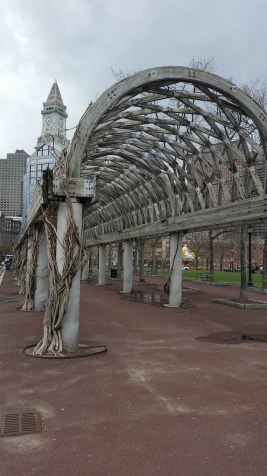
Christopher Columbus Park. The trellis like arches they have make it a stunning spot, even though I was starting to get caught in the rain there.

Clearly you can tell I have an interest and passion for history. While I know that looking forward is most important, you can learn a lot from understanding the past. Boston certainly is a city with a ton of American history, but it’s also doing wonders for our future. The bike lanes through the greater Boston area for instance, are a perfect large-scale example that other cities can use to improve their own sustainable transpiration options.

For anyone looking to travel to Boston I would recommend doing so in warmer weather because you can pretty much walk the city in a weekend and see so much more than if you took cabs everywhere. Even in early April I found myself stopping and random stores just to get out of the wind and cold. The people of Boston are very friendly and very helpful when it comes to directions and places to eat. They also have bus tours and Duck tours, which I was not able to do this trip – Duck tour is on my list for next time!

Adventures with a Passport: Hong Kong & China

Adventures with a Passport: Hong Kong & China


IMG_2436
Taken in Kawloon along Victoria Harbor looking across at Hong Kong’s Convention Center.

I am 24 years old and for the first time in my life, I left the United States. Hong Kong is about the last place in the world I expected I would travel first, but off I went. I traveled for work with my coworker with the goals of attending an industry expo, meeting with our company at our Hong Kong office and visiting the factory. Fortunately, we did also have one day to ourselves to explore, shop and site see. I am hoping to do more traveling, abroad and domestically and I hope to keep up a little log of my experiences, here we go:


20160114_134546
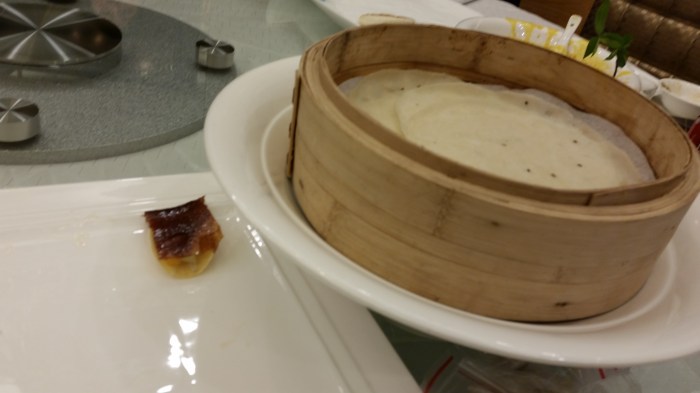
Taken after I devoured 3 servings of Peking Duck.

Favorite Taste: We enjoyed five Dim Sum meals with our Hong Kong office. Think of Dim Sum as Chinese Tapas, plates of varying sizes meant for sharing that are served on a Lazy Susan table. While visiting the factory in Mainland China we had my favorite dishes. Peking Duck, which is sliced duck on top of cucumber and a chip that reminded me of a Pringle, wrapped in a thin pancake dipped in Hoisin sauce, I hope I can find that in the US. The crunchy chip, the refreshing cucumber and the delicious duck that was filling without being too rich.

20160114_221629

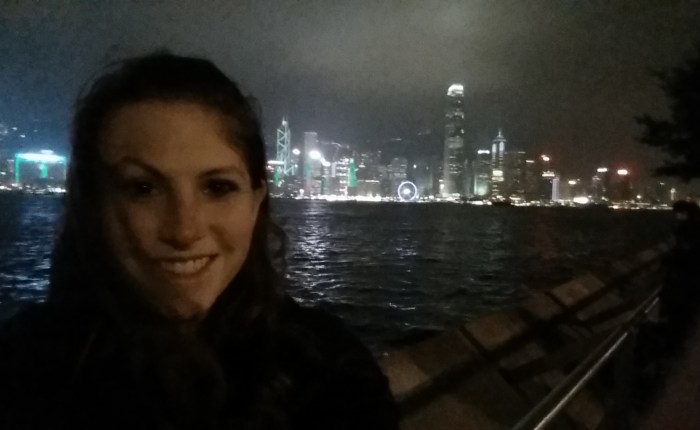
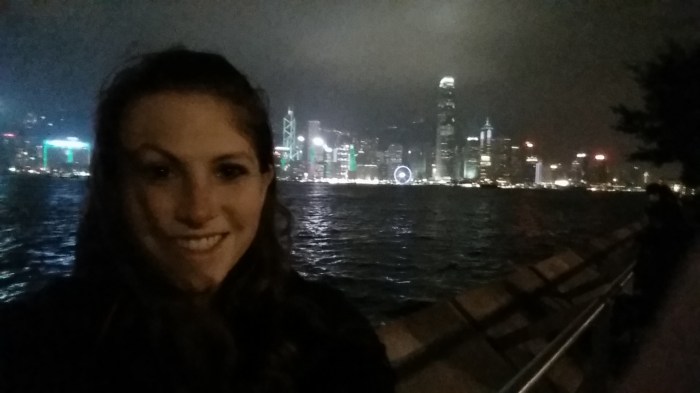
The Hong Kong skyline is at its brightest and most gorgeous just after it rains.

Favorite Site: The skyline of Hong Kong at night from the Clock Tower in Kowloon. Just a short 15-minute walk from our hotel was this walkway along Victoria Harbor. From there you can see the gorgeous convention center, Victoria Peak, the Ferris wheel and all the lights that make up Hong Kong. It’s truly unique to be able to have a skyline view from any point around the harbor making it just a gorgeous place for an evening stroll.

This gorgeous chandelier hung all the way down to about 8 feet off the ground.


Favorite Smell: During our stay we heard that from the top of the International Commerce Center you can eat dinner and look out over Victoria Harbor, we had to go check this out. Turns out it’s also the Ritz Carlton Hotel- we fancy. We rode the elevator 103 floors up to a cozy bar and lounge. The entire hotel smelled like vanilla and was so warm and inviting, I immediately felt comfortable and relaxed. A pleasant change from strange food and pollution smells I found in other parts of the city.


Favorite Touch: Victoria Peak is the highest point in Hong Kong. You can ride a tram all the way to the top to visit the sky deck and get a full view of Hong Kong, Kowloon and the surrounding areas. Even though it was raining on our one day to site see, the view looked something like this:

Super cloudy because of the rain you couldnt even see the trees or buildings close by and in the distance.

So we ate lunch there and then checked out what the shop venders had to offer. I found several scarves hanging against a wall and proceeded to feel all of them. Silk. Cashmere. Cotton. All so soft and so beautiful, I stood for several minutes touching and modeling a few before making my selection.

Favorite Sound: As many of my friends know, birds are not my favorite animals, but the birds in Hong Kong were a welcomed noise. Amongst the blaring horns and congested traffic, it was simple to hear birds chirping. Simple is a strange way to describe a sound, but hearing a bird sing in an otherwise developed area reminds me to stop and look around and take notice of where I am.

One place I didn’t mention that was a very cool experience was the fish market. You’ll question yourself getting out of the cab because it looks like you’re about to walk down an alley, which you sort of do. You’ll pass a few restaurants and fruit venders before seeing fish tanks with lobster, crab, shellfish, sharks and other local catches. I know what you’re thinking, but it actually doesn’t smell too fishy as you walk by.

This slideshow requires JavaScript.

You wind your way through an open-air fish market where fisherman will try to sell you fish as you walk by. Behind or next door to the tanks you’ll notice restaurants. These are Dim Sum style restaurants where you select your order not off a menu but by choosing the fish from the tank. The fisherman kills the fish and the restaurant prepares it. I was not present when they picked out the fish, but the experience and the food was delicious and something I’ll never forget. If you have a hard time looking at a cow and then going to eat a cheeseburger, maybe not the place for you, but for everyone else, definitely check this out when you’re in Hong Kong.

I feel extremely fortunate that I was able to travel abroad for work and also have the opportunity to take time to be a tourist. I know this is a perk not everyone gets to enjoy. Should you ever find yourself in Hong Kong, have a great time, I know I did.

20160114_221507

ARCHIVE: Just like in College, Keystone is still a Bad Choice

Although TransCanada proposed this tar-sands oil pipeline in 2009, President Obama is now getting pressure from politicians, TransCanada, environmental groups and gas and oil companies to either approve or dismiss the Keystone Pipeline Project. The proposed pipeline will bring tar-sands oil from Hardisty in Alberta Canada down through the Central United States to Montana, Nebraska and Texas oil refineries. According to the Keystone Pipeline Project’s website it will cost the United States $5.3 billon, but when have these projects ever stayed under budget.

The support for this project comes from the job creation for construction workers, maintenance crews, and office positions for towns where the pipeline travels through and we will be able to import less oil from foreign reserves. TransCanada plans to use thicker piping and “horizontal directional drilling” to go under instead of through and major rivers that they cross in the process. This will hopefully protect wildlife and ecosystems should the worst happen. Deep Water Horizon had sustainability plans too when they first started. They made sure that the valve was easy to shut off in case of a leak and they had a budget for clean up. British Petroleum paid over $400,000 million just to individuals in the Gulf area for their business or individual losses. This does not include money spent to clean up the spill, restore wildlife habitat, pay for quality testing of seafood or the money paid later to bring tourist back to the Gulf coast. All while they took a reputation hit from consumers.

The tar-sands oil reserve in Western Canada represent the third largest oil reserve in the world behind Saudi Arabia and Venezuela. The Keystone Pipeline will carry 830,000 barrels per day to its refineries. Americans are using about 700,000 barrels of oil a day but our consumption continues to increase by about 3% every year. We keep finding more oil reserves to fill our consumption but this pattern is not sustainable. The focus of the Keystone Pipe is to help reduce American dependency on foreign oil but the real problem is that we are addicted to our consumption lifestyle. Eventually there will be no reserve large enough to fill this need.

For the Central United States where the majority of the construction will take place, TransCanada says it will bring in jobs and boost economies in the towns where the pipeline passes through. TransCanada already has several offices and has built a relationship with towns in Nebraska but during a case about landownership for the project Judge Stephanie Stacy ruled against a law that was created in 2012 allowing Governor Heineman to have final say. This puts another issue up for debate and will prolong the decision even longer. TransCanada has said that they will proceed to mine regardless of if the pipeline passes, they will just have to figure out another way to transport the tar-sands oil to be refined.

With the project still being debated, why does this matter to us? I see it as showing both good and bad signs. As I mentioned earlier, the fact that the Keystone Pipeline was even proposed shows that priorities are not on green energy or sustainable practices but finding ways to continue with how we’ve been fueling our machines for over a century. While standards for emissions on cars have improved with better gas mileage and technology it hasn’t brought our carbon emissions down. The good news is that this was not an automatic yes from anyone. Even Nebraska who has worked closely with TransCanada for years is skeptical. It shows that there is resistance to the idea that continuing to use oil might have consequences. President Obama made a point of having the EPA conduct an Environmental Impact Statement, which tests to make sure that during and after the project the quality of the environment is not harmed.

As consumers we can try to reduce our carbon emissions by driving less, recycling plastic bags and products, parking the car and go into the restaurant instead of the drive through and other reducing practices. As this the decision on this project unfolds there will be more to debate and talk about regardless of the outcome.